Create a Wallet
Understand control and recovery material before creating a new wallet environment.
Start here →
imtoken · Multi-chain Wallet
A multi-chain wallet, blockchain network and Web3 knowledge hub from imtoken
From multi-chain assets and network selection to sending, receiving, DApp connections and approvals, imtoken helps users understand what an action is asking before they confirm it. Network knowledge, transaction checks and wallet-security education put addresses, gas, transaction hashes, signatures and approvals into practical context.
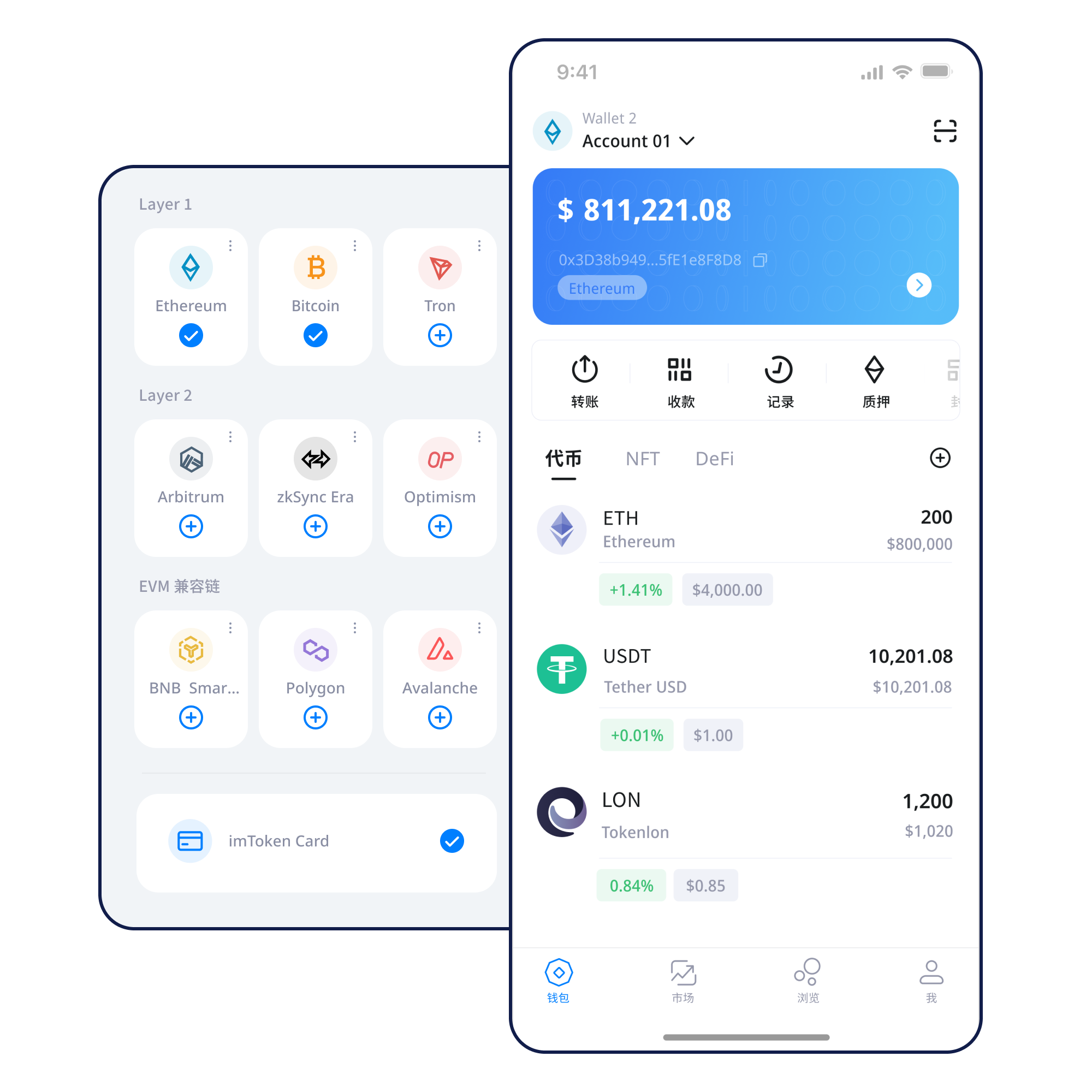
Understand control and recovery material before creating a new wallet environment.
Start here →Keep the seed phrase offline and avoid screenshots, cloud sync and remote exposure.
Backup principles →Confirm the receiving address, intended network and asset before sharing details.
Receiving checks →Review the address, network, amount and gas before submitting a transaction.
Transfer checklist →Verify the domain and account request; review each signature and approval separately.
Connection guide →Wallet capabilities
A wallet is more than a balance screen. It connects addresses, networks, transactions and contracts with keys under the user’s control. Different actions need different checks.
Multi-chain assets
The same-looking address can appear on compatible networks while balances and histories remain separate. Use network context, token contracts and confirmations together.
Send & Receive
For receiving, state the intended network. For sending, verify the address and asset, then use the transaction hash to check block status.
Transfer guide →imtoken Web
After a browser connection, new signatures, transactions and token approvals still require individual review.
Web connections →imtoken App
Review asset state, initiate transactions and inspect history while keeping the device and link source in the security context.
Explore the App →Wallet security
Seed phrases and private keys remain under user control. Check approval targets and scope, and consider revoking permissions that are no longer needed.
Blockchain Networks
Network selection determines which nodes process a transaction, which asset pays gas and where confirmations can be checked. Explore public chains, EVM, Layer 2 and gas within one reasoning framework.
Multi-chain
Networks maintain separate ledger states. Similar addresses do not replace network verification, and moving assets across networks normally requires an explicit bridge or transfer path.
Multi-chain guide →Public chain
A broadcast transaction must be processed and included in a block. Block height, status and confirmation count help explain progress.
Public-chain basics →
EVM
EVM networks share account and contract concepts, but network IDs, gas assets and deployments remain separate. Approvals also belong to a specific network context.
Understand EVM →
Layer 2
Layer 2 systems can use different execution and settlement designs. Bridging across layers requires attention to the destination network, arrival state and possible exit waits.
Learn Layer 2 →
Gas
Gas relates to execution resources while final fees also depend on network rules and congestion. Pending, success and failure should be distinguished through on-chain status.
Gas & confirmations →Start safely
Keep one verifiable checkpoint at every stage: source, recovery material, network, address, transaction result and approval state. The same sequence remains useful on unfamiliar networks and DApps.
Use a clear download entry point rather than unknown files sent through unfamiliar messages.
Understand what recovery material controls and never enter a seed phrase or private key into a web page.
Keep the seed phrase offline and avoid screenshots, cloud sync and uncontrolled digital copies.
Confirm the network where the asset exists, the destination network and the appropriate gas asset.
Review address, network and amount, then retain the transaction hash for verification.
Read DApp requests before signing and periodically review permissions that are no longer needed.
Web3 & DApps
A wallet connection opens an interaction channel; it does not mean every later request should be accepted. Message signatures, transaction signatures and token approvals have different consequences.
Security
Seed phrases and private keys should remain under the user’s control, and official personnel will not request them. Wallet security also means checking addresses, networks, signing targets, token approvals, devices and unfamiliar links. Because on-chain transactions generally cannot be unilaterally reversed by a wallet, review before confirmation matters.
Third-party DApps and smart contracts can carry technical or malicious risks. Check approval targets and scope, consider revoking permissions no longer needed, and be cautious on public devices, public networks or remote-control environments.
Security CenterAcademy
Begin with wallet control, then understand addresses, networks, gas, transaction hashes, DApps and approvals. A clear learning order makes unfamiliar networks and interactions easier to assess.
Featured starter
Addresses identify accounts, seed phrases and private keys relate to control, networks determine where transactions occur, gas relates to execution cost, and a transaction hash helps trace activity. In DApps, connection, signatures and approvals should be understood as separate actions.
Read the starter guide →Ethereum & PoS
Staking information should begin with network mechanics, reward sources, exit processes and risk rather than presenting participation as fixed income.
Foundation
Ethereum uses PoS consensus. Validators perform protocol duties, reward conditions can change, and withdrawal or exit timing can depend on protocol rules and queue conditions.
Before participating
Staking does not guarantee returns. Rewards can change, exits may require waiting, validators can face penalties, and smart-contract, third-party and asset-price risks remain relevant.
Updates
When a verified date is unavailable, the site does not manufacture one. Notices focus on what users need to know, which actions may be affected and what should be checked.
FAQ
For transaction, network or DApp issues, use public addresses, transaction hashes and network state for troubleshooting. Do not provide a seed phrase, private key or verification code.
No. Seed phrases and private keys should remain under the user’s control. Official personnel will not request them or verification codes.
Assets and transaction state belong to specific networks. A similar address format does not replace network verification.
Confirm the network and transaction hash, then inspect the corresponding block explorer for status, block height and confirmations. Pending does not automatically mean failed.
No. Connection, message signatures, transaction signatures and token approvals are separate requests that should be reviewed independently.
It generally allows a specified contract to use a token within an allowance. Review the spender, amount, network and contract address.
They should normally be understood as separate network states. Moving assets across layers may involve a bridge and different arrival or exit confirmation processes.
No. Rewards, network conditions and exit queues can change, and validator penalties, smart-contract risk, third-party risk and asset-price volatility remain relevant.
imtoken
All download actions enter the download page. After obtaining the wallet, complete recovery-material backup before working with assets or DApps.